
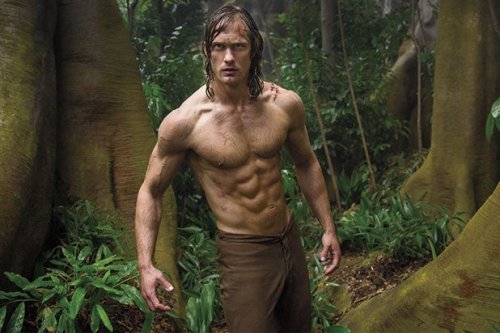
It’s possible that audiences may see Tarzan, the iconic jungle man who swings from vines and lives in the wild, on the big screen again in the near future. According to The Hollywood Reporter, in an effort to give Edgar Rice Burroughs’s famous pulp fiction fresh life, Sony has acquired the film rights from Burroughs’s estate. Sony reportedly plans to do a “complete redesign” of the character in order to reintroduce him to a new, contemporary audience. No artists or designers have signed on at this time. The legend of Tarzan is one that has endured throughout the ages, so many people will recognise it even if they’ve never watched a film starring the figure. A child is abandoned in the bush and grows up among monkeys. However, after meeting and falling in love with Jane, he chooses to abandon the forest in favour of London.
After seeing how cruel human beings can be, he heads back to the African jungles to continue his career as a famous hero and explorer. The first Tarzan story was published in 1912, and the character and his adventures quickly gained popularity, leading to its adaptation into cinema and television. Disney’s 1999 animated remake, with Tony Goldwyn as Tarzan, Minnie Driver as Jane, and a soundtrack by the great Phil Collins, is arguably the most well-known. After 2016’s David Yates’ The Legend of Tarzan, which starred Alexander Skarsgrd as the Ape Man, the last time audiences saw Tarzan in a feature film was in 1933. Even though it was a major turning point for the character and had an A-list cast, the response was mixed.
As a cultural artefact of its period, the Tarzan narrative has been under intense criticism in recent years. The original Tarzan stories are rife with sexism, racism, and colonial ideals.
Sony plans to sidestep the difficulties of earlier adaptations by keeping the concept of a wild, orphaned boy living in the woods but excluding its less appealing elements. Disney’s Tarzan was able to clean up the material by adopting a fresh perspective and using the narrative’s characters and basic concepts to tell its own story, rather than trying to retell Burroughs’s.
The Legend of Tarzan also attempted to right the wrongs of the original narrative, but it bombed by making Jane less of a damsel in distress and by addressing the racism that permeated the original. Sony has not yet detailed its plans for an update, and it will be difficult to create an adaptation of the story that is up to day and appealing to today’s audiences.
In the meanwhile, check back with us at Collider for updates on Sony’s Tarzan.