
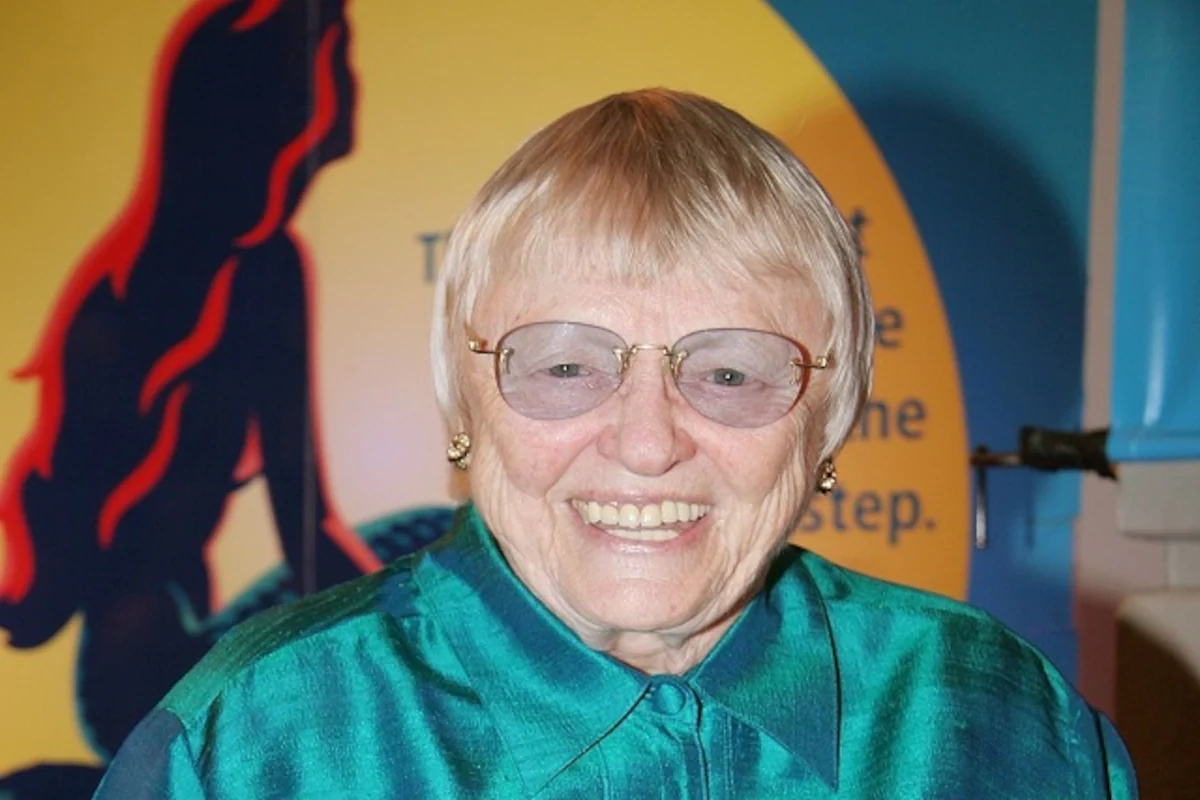
Being a princess, a genie, or a hero is one thing. Being the bad guy definitely has its enticing advantages. One of Disney’s most iconic antagonists, Ursula, was brought to life by the provocative voice of Pat Carroll. Morgana, her sister, is just as cunning. Carroll kept returning to the ocean below to spread her oh-so-fantastically-evil grin. Melissa McCarthy will soon join Queen Latifah in taking on the antagonist from The Little Mermaid (1989).
Obviously, the original animated production is well-known. The grandiose visual design of the characters and Carroll’s performance as their voice permanently fused into a single entity. Being the first female villain to have such a prominent role, her singing of “Poor Unfortunate Souls” was also a once-in-a-lifetime chance.
There was a near miss with Carroll becoming the first to play this part. The Little Mermaid adaptation’s delay paid off in spades when it attracted a stellar cast. The early 1940s saw the demise of the initial intentions to build it. In the later 1980s, things were revived thanks to a pitch from filmmakers Ron Clements and John Musker. Howard Ashman and Alan Menken, the maestros of the music, were among those brought on board. However, Pat Carroll wasn’t promptly brought on board. It’s easy to see why Bea Arthur was suggested so often.
Arthur, who starred in The Golden Girls at the time, was a perfect fit for Ursula because of his deep voice and singing experience. In an interview with Allan Neuwirth’s book Makin’ Toons: Inside the Most Popular Animated TV Shows and Movies, Musker discussed the reasons the project stalled (2003). Her agency took exception to the “witch” part, and as a result, Arthur never saw the screenplay. Neuwirth outlined two heavy hitters that came very close to winning. Both Elaine Stritch, a Broadway legend, and Charlotte Rae (Diff’rent Strokes) are seasoned comediennes.
However, when it was determined that neither of them would do, Pat Carroll tried out. She was officially cast after waiting an entire year for word. Ursula was neither a villain nor given a name in Hans Christian Anderson’s fairy tale. The role had to be developed more in the 1989 movie version. Former notions of a frail sea witch no longer applied. Body-wise, the Evil Queen, Maleficent, and Cruella were all drawn as being almost all bone. Of course, it’s not to argue that Ursula’s attractiveness rested solely on her ample physique. Her blue eye makeup was long-lasting and gave her a gorgeous appearance. She has mood swings, so her gelled-up hair might easily become unruly.
She let forth a cackling guffaw. Her transformation out of the Vanessa mask is scarier than a lot of real monster special effects. Ursula, unlike the Evil Queen and Maleficent, does not change into something different at the end of the movie; rather, she just becomes larger. Ursula only has roughly twenty minutes of screen time (out of a total of eighty), yet she commands the whole audience’s attention throughout that time. When she’s having one of her numerous internal dialogues, she could say something like, “I’ll see him writhe like a worm on a hook!” with relishing venom.
According to Makin’ Toons, she was an “ex-Shakespeare-an-actress-turned-car-seller.” The actress was able to be both sardonically humorous and menacing by embracing the role’s theatricality. Ursula is a scheming self-interested person who did not treat Ariel fairly in their bargain (Jodi Benson). Until now, no Disney villain has ever gotten their own theme tune. Ursula (and Carroll) didn’t squander the chance that their male counterparts had. Who else wished they could whip up potions as easily as she does? She uses fake empathy to control Ariel in “Poor Unfortunate Soul,” which culminates in a loud outburst of frustration. This is your last chance! Ashman deserves a thank-you message for his efforts.
Carroll said that he was why she performed that special song the way she did. The grand reveal is a visual and auditory masterpiece, which touches on the larger is badder transition discussed before. Ursula transforms into the “ruler of all the ocean!” once she steals the trident. It’s rough at sea, with waves crashing and the ocean churning. The sky becomes overcast, and bolts of lightning can be seen. Ursula, the terrible core of this chaos, has a deeper, more violent voice. She meets an end as stunning as her life. Many Disney villains met their ends via bloodless but noticeable falls to the ground in an effort to avoid a macabre portrayal of their demise. Ursula was electrocuted by lightning during a storm after taking a splintered bow to the stomach during a shipwreck.
Her tentacles act like the opposite of a kraken’s strike and pull the wreck down with her as she goes down. This marine creature wasn’t the one doing the destruction, but it ended up being the one who did. Return to the Sea (2000), a sequel released only on home video, is essentially a rehash of the first. In contrast to her mother, Ariel (Liv Tyler), her daughter Melody (Tara Strong) is forbidden to approach the ocean. Who will step into Ursula’s villainous shoes? Carroll came back to lend her voice to Ursula’s sister, Morgana. These tentacled sisters are a rare addition to the small group of Disney villains that do not have a brother. Although she is not as formidable as Ursula, Morgana nevertheless finds her presence extremely irritating.
To get back at the dearly departed, she wants to carry out Ursula’s scheme for power, except this time with more success. It’s also an attempt to prove to her absent, presumably deceased mother that she was the superior offspring. Morgana and her cohorts retreat after a failed attack. That takes a long time. A rebellious Melody takes a stand against her mother, and Morgana views this as an opening to woo Melody. The sea witch tricks melody into taking the trident that belonged to her grandpa. It’s a success, at least up until Melody figures out what she did wrong. Morgana is frozen in a block of ice by King Triton (Kenneth Mars) and afterwards abandoned to the depths of the ocean. Despite Morgana’s best efforts, she would never be accepted as Ursula’s sister. This is not as cruel as what happened to Ursula, but it was still very painful.
In both this life and the next. Listen to Morgana exclaim, “You all shish-kebabbed her!” when she first introduces Ursula. Whether or not a sequel was necessary, Carroll delivered another outstanding performance. And Carroll didn’t skimp on the infamous cackle; if anything, he added a couple more. Morgana may not have been as memorable of an antagonist as the hero, but she still brought something new to the table. She took on Bea Arthur’s tall, svelte form, the initial ideal for the role of the sea witch in 1989’s The Craft. Morgana, in contrast to Ursula’s purple hue, had a green complexion and full, thick locks. Even Ursula’s coral-like lair had a new look and feel after a relocation. Morgana withdrew to a fortress that was like a frozen wasteland.
It made perfect sense to use ice as part of what ultimately undid her. Both before and after the release of the cartoon masterpiece, Carroll enjoyed a fruitful career. Her television credits include appearances on Laverne & Shirley, Designing Women, and ER. She has performed in theatre productions including “Catch a Star!” and “Gertrude Stein: A Life in Letters.” In 2007, she appeared in the films Nancy Drew and Freedom Writers. Just a fraction of the many accomplishments she has been recognised for are those listed here. But no matter where she went, be it the Little Mermaid TV show, House of Mouse, Disney video games, or Disney theme parks, she always found herself drawn back to Ursula. Even before her death, the role was a lasting monument to the actress’s abilities. In her role as Ursula, Pat Carroll was a fantastic villain thanks to how she impersonated a mermaid and stole her voice.