
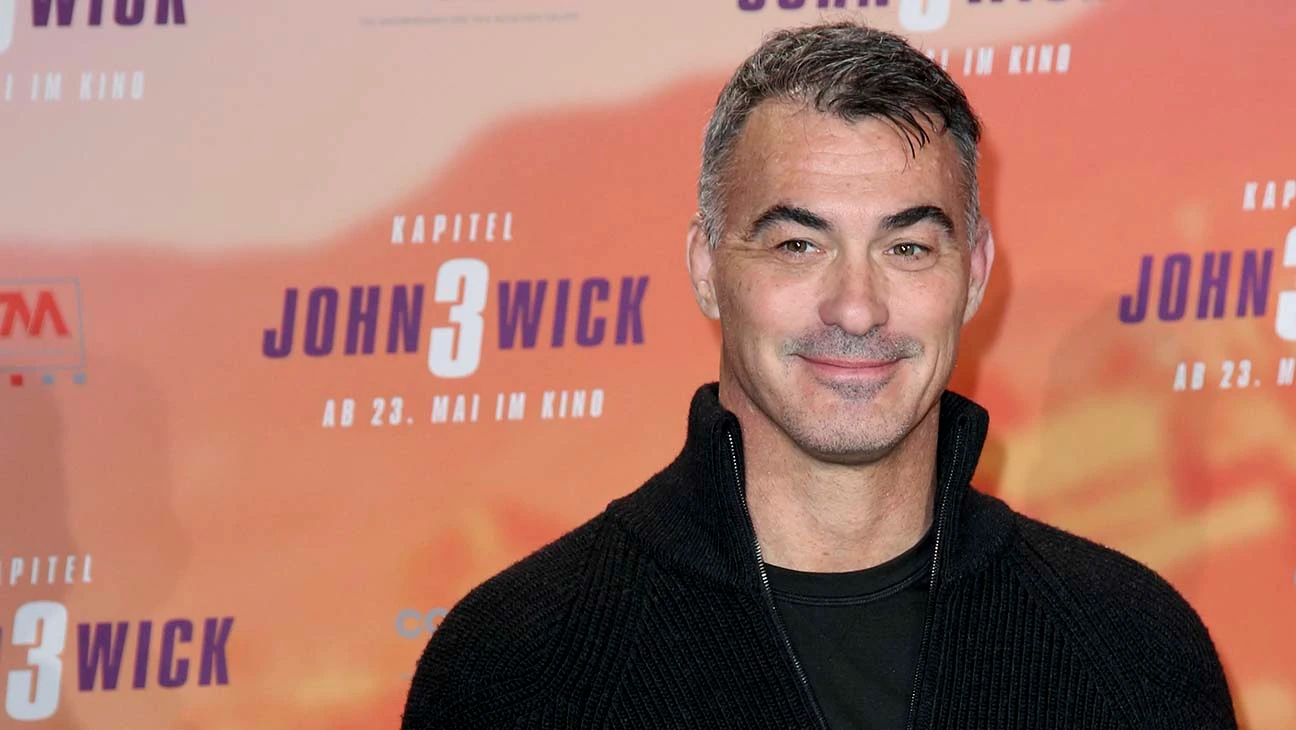
If you were to ask any film connoisseur about the 2008 hit Speed Racer, you would hear superlatives such as “masterpiece,” “ahead of its time,” “live-action manga,” and many more. The film’s groundbreaking style was inspired by Japanese animation of the 1960s and was brought to the big screen by the visionary sisters Lilly and Lana Wachowski. Director Chad Stahelski of “John Wick: Chapter 4” was present for all of it and has opened out exclusively about his time on set. Stahelski worked as a stuntman at the time, and he had previously collaborated with the Wachowskis on both The Matrix films and V for Vendetta.
The director told Steve Weintraub in a promotional interview for Day Shift that, from a director’s perspective, the picture was a game-changer for him as a director. Could you tell us if Stahelski’s enthusiasm for working on Speed Racer at the time was typical? Can you believe that? To be sure, a lot. The Wachowskis approached us after we had completed all of the “Matrix” films and “V for Vendetta,” saying, “Hey, we want to do the live-action version of “Speed Racer.” […] Almost with multiple layers, like these enormous composition photos, is the anime style we have in mind for this, although we may need some genuine drive to pull it out. In order to change the scenery and other elements, we’ll be using motion-based technologies. […] Since we had already done so many practical [effects], the shift to a more technologically oriented film was really intriguing.
Stahelski also used the chance to praise the Wachowskis for their outstanding efforts in developing the movie’s premise and to emphasise how crazy it must have been to bring it to reality. The filmmaker claims that the film’s visual style was achieved by filming “each scene three or four times in different layers” and then splicing the resulting composite. That’s the initial squad that’s in charge of all the blatantly obvious tasks. The second group would be the supporting actors or actresses, who would be in the background or on the second level of the cast, or the cast members who would be “walking it back” in the blocking. The third tier would include canines, chimpanzees, animals, and all the action scenes. The last layer would consist of the visual effects blue screen sets.
Therefore, there were four levels, four kinds of comps depending on where the actors would go and who was in which tier, and four directors to oversee everything. And the visual effects team led by John Gaeta and Dan Glass is incredible. He also discussed how his time spent working on the set of Speed Racer broadened his perspective and expanded his mind in terms of the technical components of filmmaking. He has been “lucky enough to work on some very huge budget and very massive films that utilised increased VFX in the conjunction with practical” effects, but even he admits that Speed Racer is on a completely different level.
As the commander said, “since now, you had to think extremely three-dimensionally on how we’re wrapping around and anticipating you had to do your homework every morning while the other units were shooting.” Stahelski elaborates, “it was simply a big, massive learning curve.” To wrap things off, he expresses his gratitude to Speed Racer and declares that he has “never learnt as much in such a short amount of time.” Stahelski directed all three John Wick films and has a number of other interesting projects in the works, including the remake of Highlander and a cinematic version of the best-selling computer game Ghost of Tsushima.