
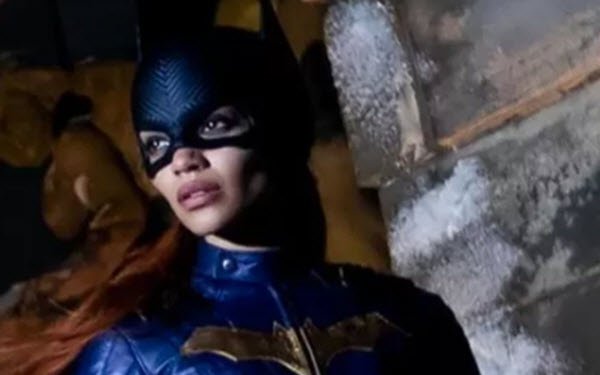
Many people took to social media to express their shock and disbelief at Warner Bros. Discovery’s decision to cancel their DC Extended Universe film Batgirl, which stars Leslie Grace. After seeing its $75 million budget balloon by $15 million as a result of the epidemic, the movie was put through its usual paces. On August 2, Warner Bros. surprised fans and the media by announcing that Batgirl was a failure, even though the film had reached post-production at a budget of $90 million.
According to Variety, a number of insiders believe that taxes are the most likely cause of Batgirl’s sudden and unexpected mortality. Some claim that the cancellation of Adil El Arbi and Bilall Fallah’s Batgirl was due to unfortunate timing and that the film was ultimately a sacrifice made for the sake of business. In spite of Warner Bros. executives Jason Kilar and Ann Sarnoff being fully devoted to enhancing HBO Max throughout the creation of Batman: The Animated Series, the DC Extended Universe film was snared by new CEO David Zaslav of Warner Bros. Discovery.
The Hollywood Reporter was provided with an official statement from a Warner Bros. spokeswoman about the studio’s decision not to press further with Batgirl: As a result of our leadership’s strategy adjustment in relation to the DC universe and HBO Max, we have decided not to distribute Batgirl. This choice does not represent the quality of Leslie Grace’s performance. We owe a debt of gratitude to Batgirl and Scoob’s creators. “We want to cooperate with everyone again in the near future,” says “Holiday Haunt.”
Warner Bros. executives Kilar and Sarnoff worked hard during the film’s development to support HBO Max, including the choice to launch the complete 2021 theatrical schedule all at once. The gamble paid off in the form of a substantial subscriber base, but the studio’s relationships with several top-tier celebrities and agents were damaged by “generous bonuses,” which were eventually remedied. After the merging of Warner Bros. and Discovery in the spring of 2022, Zaslav, a famously frugal penny-pincher, took charge, and the straight-to-streaming strategy was once again abandoned for theatrical first-run feature films. According to legend, that’s where Batgirl’s ruin rests.
El Arbi and Fallah’s DCEU bridge was axed because it was neither big-budget enough for a return to theatres nor economically modest enough to pass the streaming-only gauntlet. It was rumoured that Zaslav didn’t think the money needed to bring Batgirl to the big screen was worth it, even if the cast included J.K. Simmons, Michael Keaton, and Brendan Fraser, as well as Ivory Aquino, portraying one of comics’ first popular transgender vigilantes Alysia Yeoh.
This, along with allegations that the final result was not up to viewers’ expectations, ensures that Batgirl will remain in the shadows for the foreseeable future. WB Discovery would eat the $90 million-plus “creative capital” rather than releasing it directly to HBO Max or shelling out the $30 to $50 million it would take to advertise and distribute it theatrically, possibly in favour of tax write-downs.
The DCEU’s future is now in doubt, following a slew of troubles with The Flash, shaky reviews for prior films, and Ben Affleck’s unsure engagement in the universe. While it appears like Zaslav is committed to getting DC in shape, shelving a post-production picture seems like an odd method to do so. Dwayne Johnson’s Black Adam, the next DC blockbuster, will be released in theatres on October 21.